I founded, built and scaled
12 companies with multiple exits.

Now coaching entrepreneurs with $5M+ businesses to triple their revenue.

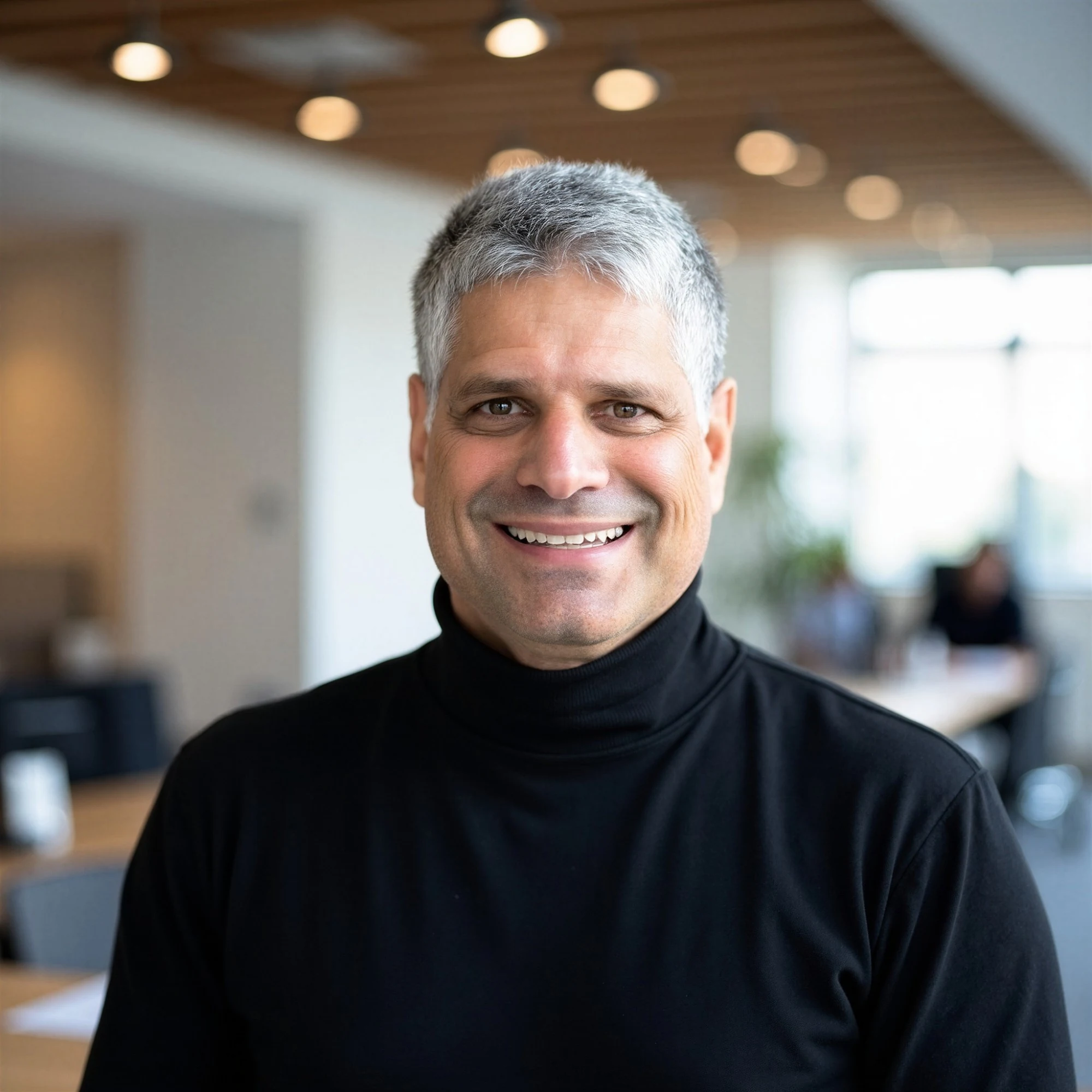
Steven Krane

My Approach

Built on the Bloom Growth Operating System's eight essentials.

Growth Plan

Growth starts with clarity. A solid Growth Plan creates alignment around where you're going, why it matters, and what it will take to get there.

People

Employees are the foundation of your business. Prioritizing people means creating core values, ideal team structure, management training, and paths of advancement.

Meetings

Meetings shouldn't feel like a waste of time. A recurring rhythm built with intention drives alignment, accountability, and action across the organization.

Sales and Marketing

Revenue growth comes from two engines: acquiring new clients and expanding existing relationships. A clear client journey and go-to-market process create predictable growth.

Finance and Data

You can't manage what you don't measure. Know your revenue, margins, cash flow, KPIs, and use them to make smart, timely decisions.

Technology

Most companies don't take time to properly vet what they need. Eliminate redundant tools, optimize workflows, and create a seamless customer experience.

Process

Goals lead to one-time wins; processes lead to repeatable ones. Improve recurring tasks, reduce rework, and document them the way your team actually uses them.

Relationships

Relationships are the foundation of every growing business. Build self-awareness, emotional mastery, relational skills, influence, and human flourishing, so leaders inspire teams and lead with purpose.

Insights

Lessons From the Edge

I Built the Country's First Frozen Meal Store. Then I Torpedoed It.

Read article →
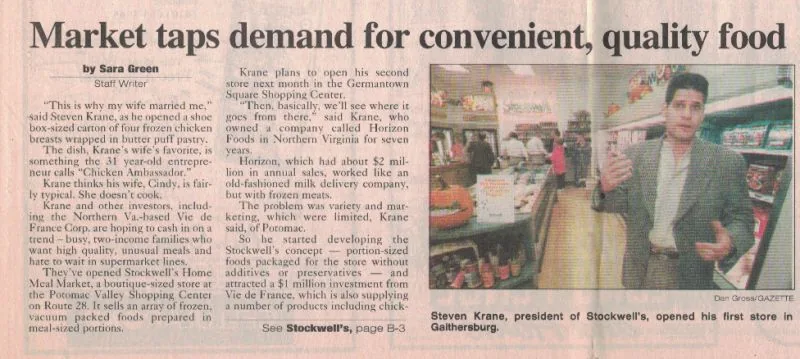
Newspaper clipping about Steven Krane's frozen prepared-meal stores

In 1995, I founded the first frozen prepared-meal store chain in the country. My partner was George Naddaff, the man who built Boston Chicken, later renamed Boston Market. At the time, Boston Chicken had just gone public in one of the hottest IPOs in history.

The model was already proven up north. A Canadian chain called M&M Meat Shops had 250 locations. The math was simple. Take a proven concept, bring it south, build a 2,500-unit chain.

Everything was perfect. I raised the money. I had the best partners. We had the playbook from a company that had already cracked it.

And then I did the thing my brain always wants to do. I changed it.

I didn't know I had ADHD back then. I just knew that a finished, working system felt like an itch I had to scratch. Where other people saw "proven, don't touch," I saw a blank canvas. So I took a concept that already worked and rebuilt every single piece of it.

M&M won in rural markets. I opened upscale. M&M kept prices low. I went premium. They had a formula that worked, and I improved it right into the ground.

We opened two locations. Both failed.

For years that one stung more than any other. The setup was perfect, and I was the one who couldn't leave it alone.

Here's the part that finally gave me peace. In 2008, M&M brought their own stores to the US. The proven model, run by the people who built it. They failed too. Apparently, the concept itself didn't travel the way the math promised.

That didn't make my version smart. But it taught me the real lesson.

ADHD is the same wiring that makes me a great visionary and a terrible operator. The drive to reinvent is a gift when you're creating something new, and a wrecking ball when you're handed something that already works. The skill isn't killing that instinct. It's knowing which seat to be in when it shows up.

Today, I know exactly what I am. I'm the visionary, not the operator. I build the vision and let the people wired to execute run the play.

That's the heart of what I now teach through Bloom Growth: getting founders in the right seats. If I'd understood my own wiring back then, and had a framework like this to force the discipline, it would have saved me millions of dollars and ten years of anguish.
I Should Have Been a Billionaire

Read article →
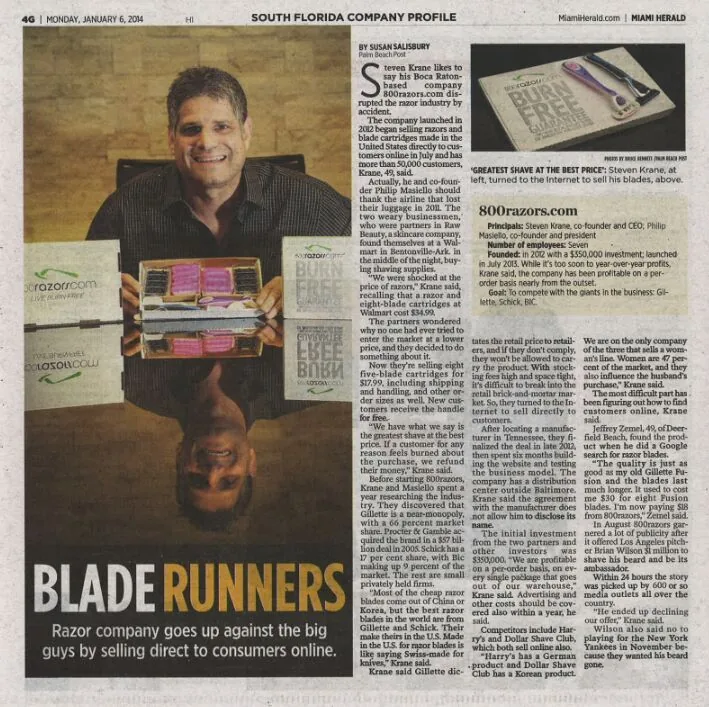
South Florida press profile of 800razors, Blade Runners

In 2012 I founded 800razors. Same thesis as Dollar Shave Club (raised $165M, sold to Unilever for a billion) and Harry's (raised $250M pre-revenue).

My aha moment came in 2011. I got fed up spending $5 on a single razor blade, and started digging. Turns out Gillette and Schick controlled over 90% of the razor market, and no one had launched a new razor in North America in over 40 years. The last was Bic, with the disposable, in the early 70s. The reason was simple: both Gillette and Schick were fiercely litigious, and nobody wanted the fight.

Each of us solved that problem differently. Dollar Shave Club sourced cheap razors out of Korea. Harry's used its war chest to buy an old razor factory in Germany outright.

I had neither a cheap supplier nor hundreds of millions to buy a factory, so I had to do it the hard way and went straight to the source.

Gillette wouldn't do branded or private label deals, period. Schick was more open to it. The problem was that it took close to 18 months to close my deal with Schick for North America exclusive rights to their private label razors.

By then Harry's and Dollar Shave Club had already launched. Dollar Shave Club went on to sell to Unilever for $1 billion, and Harry's landed a $1.37 billion offer from Edgewell (a deal the FTC ultimately blocked, keeping them independent). Either way, both had beaten me to the outcome while my deal was still crawling toward the finish line.

I cracked the hardest part of the business. But by then the window had closed. Harry's and Dollar Shave Club were already spending thousands to acquire customers. The economics didn't work as I didn't have hundreds of millions to spend on customer acquisition.

Here's the thing. I have no regrets.

What I learned is that being right is not the same as being first, and solving the hardest problem is worthless if the timing has passed you by. Capital and timing beat being clever almost every time.

George Foreman Was My Partner. It Nearly Broke Me.

Read article →
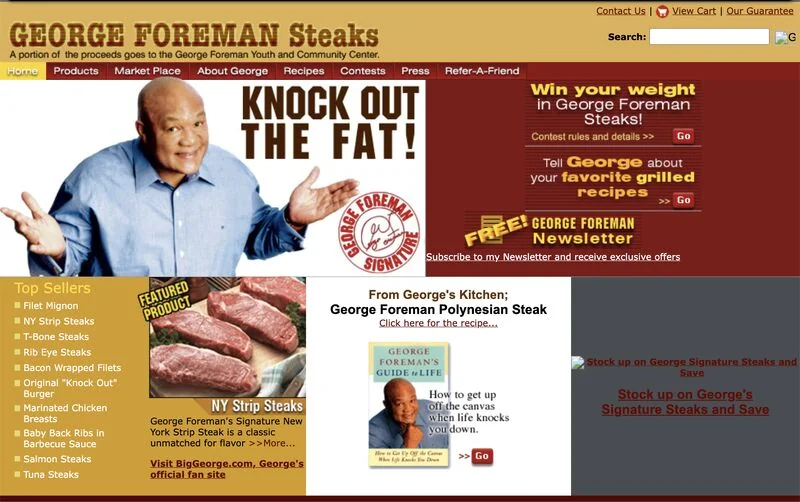
The George Foreman Steaks website

In 1988, I graduated from McGill University in Montreal and moved to the US to launch a home-delivery frozen food business. I stayed in the food industry for the next 15 years, opening the country's first chain of frozen food stores (Stockwell's), followed by a chain of prepared meal stores (The Daily Market).

Then came George Foreman.

At the time, the George Foreman Grill had sold 94 million units, still the best-selling kitchen appliance of all time. I saw the wave coming and I wanted to ride it. So I partnered with George to launch George Foreman Steaks, selling premium meats online and on QVC, piggybacking off the grill's massive momentum.

It should have been a home run.

But in my excitement to close the deal, I gave away too much in royalties. Compound that with the cost of next-day shipping frozen steaks packed in dry ice, and the unit economics quietly collapsed.

Here's what I know now that I didn't fully understand then: my ADHD is my superpower AND my blind spot.

The same brain that spotted the George Foreman opportunity before anyone else, the pattern recognition, the excitement, the go go go, is the same brain that signed a term sheet without doing the math slowly enough.

Impulsive decisions dressed up as bold vision. I've since learned to tell the difference.

That business didn't survive. But the lesson did, and it's shaped every deal I've touched across 12 companies since. If you're a founder with ADHD, I see you.

The fire is real. So is the risk.

Slow down the deals. Speed up everything else.

A Single Magazine Review Killed a Product I Was About to Bring to an $8 Billion Company

Read article →
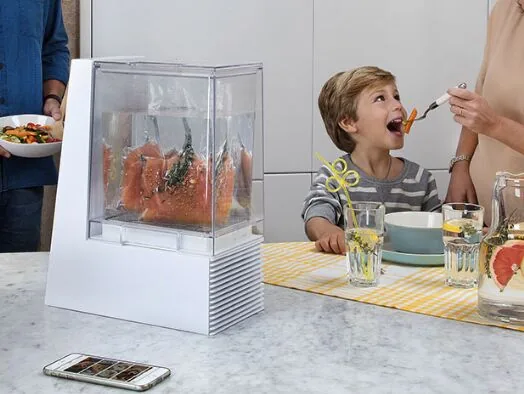
The Mellow sous-vide cooker on a kitchen counter

I was close to cementing a deal to bring a revolutionary sous-vide cooker to Jarden, the $8 billion-plus company that owned Crock-Pot, Rubbermaid, and FoodSaver.

Mellow was the most innovative kitchen appliance I'd seen in years. A sous vide machine you could load in the morning. It kept your food cold all day, then started cooking on a schedule so dinner was perfect the moment you walked in. A patented built-in refrigeration system did exactly that.

It should have been a no brainer. Then a flaw surfaced. In 2018, Wired reviewed the Mellow and scored it 1 out of 10. The problem wasn't the cooking. It was that the machine couldn't pull the food cold enough, fast enough, and hold it there, which left ingredients too long in what food scientists call the danger zone, between 40 and 140 degrees, where bacteria multiply. The review spread. It destroyed the business.

Here's what I took from being that close to it:

They had a brilliant idea. They had engineers good enough to build it. What they didn't have was a single food scientist in the room. So nobody flagged the one thing that turned out to be fatal: food sitting below 140 but not safely under 40 is food growing bacteria. The danger zone wasn't a detail they got wrong. It was a detail they didn't know existed.

In all my businesses, the most expensive lessons came from the same place: thinking I could figure it out myself. The wins came when I stopped doing that. When I brought in someone who had already lived the problem, who'd made the mistake I was about to make and had the scar to show for it. That person sees in five minutes what would have cost you the company to learn the hard way.

Mellow didn't need a better engineer. It needed one person in the room who'd spent their career around food safety and would have asked, on day one, "what happens to the food while it's waiting?" That question was a one-sentence fix. Not having anyone to ask it was fatal.

Build the thing that works. Then bring in the people who know what you don't know you don't know.

Carol Alt's Diet Became a Beauty Brand

Read article →
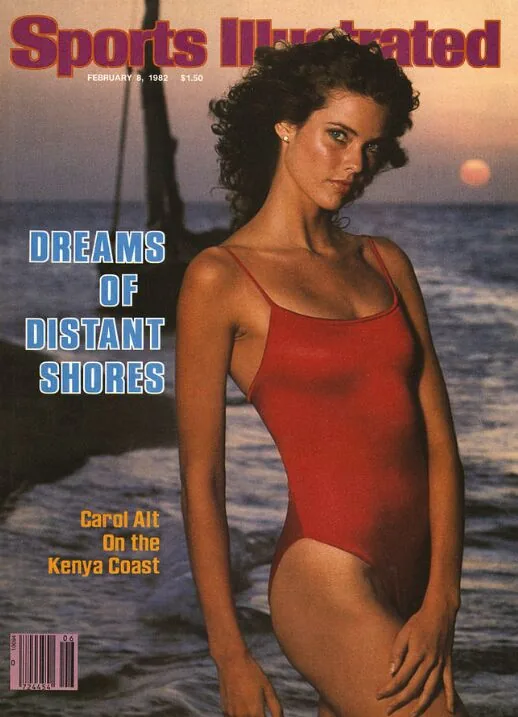
Carol Alt on the cover of Sports Illustrated

In 2008 I was watching The Apprentice when a skincare company fell into my lap.

Carol Alt was on that season. Three-time Sports Illustrated cover model. And somewhere in the back of my head I knew one more thing about her: she was a raw foodist.

Raw foodists believe heat destroys the active nutrients in food. Cook it, and you lose the vitamins and minerals that made it worth eating.

That fact had been sitting in my head doing nothing. Then it collided with a second fact I also already knew: skincare ingredients get processed with heat too.

Two facts I'd had for years. The only new thing was putting them in the same room.

Raw Essentials was the brand I created with Carol Alt, built on raw, unheated active ingredients, fronted by a supermodel who lived the philosophy. I reached out to her manager. Within a month I had an agreement structured, a manufacturer identified, and a pitch in front of Home Shopping Network, where we launched.

It worked. We placed it in Ulta and in mass drugstores across the US and Canada. I sold the company in 2012.

Here's what I've learned after doing this a dozen times: most good ideas aren't invented. They're noticed. The raw food fact and the skincare fact were both public, both obvious, both available to anyone watching that episode. I just happened to hold them at the same time and ask what happens if they touch.

You probably already know the two facts that become your next venture. They're just sitting in separate drawers.

Persistence overcomes resistance.

Michael Phelps Has ADHD. So Do I.

Read article →
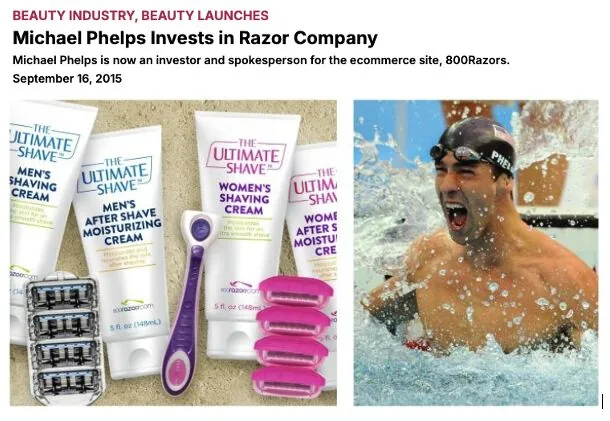
Press feature: Michael Phelps invests in 800razors

Maybe that's why I saw what everyone else missed.

In 2015, Phelps was coming off a DUI suspension. Most brands were keeping their distance. I leaned in. He became an investor, partner, and spokesperson for my company 800Razors.com. It was his first partnership after stepping away from the sport.

A year later, he won 5 gold medals in Rio.

Phelps didn't succeed because of discipline alone. He succeeded because he had coaches and systems around him that matched the way his brain works.

That's what I've learned building and exiting 12 companies. And it's what I help CEOs with now. The founders who scale fastest aren't the most organized. They're the ones who stop fighting their wiring and start building an operating system around it.

I Launched a CBD Drink with Mike Tyson Called DWiiNK

Read article →
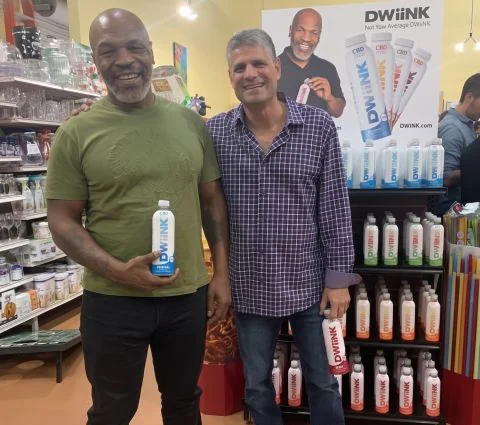
Steven Krane and Mike Tyson at the DWiiNK product display

I launched a CBD-infused drink line with Mike Tyson called DWiiNK.

The name? That's how Mike pronounces "drink." If you've ever heard him talk, you know exactly what I mean. It was the perfect brand touch: authentic, memorable, and only Mike Tyson could own it.

The product was great. The team was great. Mike was all in.

We had four flavors, premium quality, and priced it at $3.99 so anyone could afford it. We weren't trying to be boutique. We wanted mass distribution.

Then the laws got in the way.

State after state, we couldn't get distribution approved. The regulatory patchwork across the US made it nearly impossible to scale. We eventually had to close.

Here's what I took from it: a great product doesn't survive without a viable path to market. Distribution isn't a detail. It's the whole game.

I now bring that lesson into every company I coach. Before you fall in love with your product, fall in love with your go-to-market. Know your lane. Know your blockers.

I Named a Product "Cesar Millan." Then Came the Cease-and-Desist.

Read article →
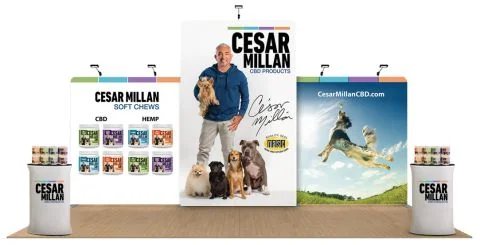
Cesar Millan branded CBD dog products display

A few years ago, I launched a dog treat company with Cesar Millan, the Dog Whisperer himself.

Great product. Great partnership. One problem.

We named it Cesar Millan.

Turns out Mars Petcare, a $30 billion company behind Cesar cat food, had something to say about that. Their legal team reached out faster than our lawyers ever did, with a cease and desist.

Here are the lessons I learned the hard way:

  • Fall in love with your idea, not your brand name. Names can be changed. Momentum lost to legal battles cannot.
  • Your legal team should be at the table at the beginning, not called in to clean up the mess.
  • A great product and a great partner can't save you from a preventable mistake.
  • Even the best ideas have blind spots. Build a team around you that catches what you miss.

We ultimately had to walk away from the name, and it cost us dearly.

The best entrepreneurs I know aren't the ones who never make mistakes. They're the ones who make them early, learn fast, and never make the same one twice.

He Turned Down $1 Million. I Got Millions in Free Press.

Read article →
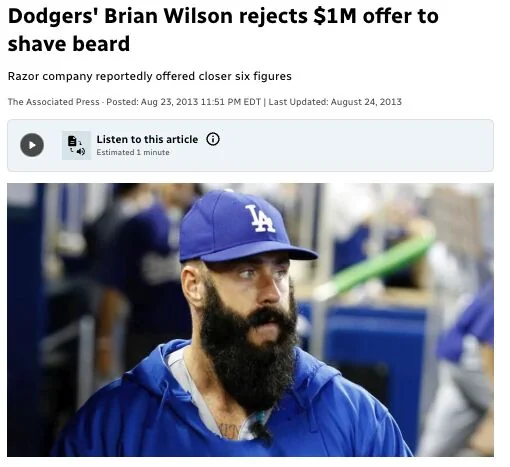
Associated Press headline: Dodgers' Brian Wilson rejects $1M offer to shave beard

In 2013, I offered the most famous beard in baseball $1 million to shave it on national television.

At the time, I was the founder of 800Razors.com. Brian Wilson had just signed with the Dodgers after Tommy John surgery, and suddenly that beard was back in the headlines. Everyone was talking about whether he'd shave it. I saw the moment and grabbed it.

I made the offer public. His reps at MVP Sports said the beard was "going with him to the grave." He turned us down flat.

But here's the thing. It didn't matter.

The story got picked up by CBS Sports, MLB.com, Bleacher Report, TIME, and TMZ. Big name athletes started reaching out about partnerships. All from an offer that cost us nothing because it got declined.

This is newsjacking. You don't create the story. You insert yourself into a story that's already happening. Wilson's beard was the headline. We just made ourselves part of it.

The lesson? You don't always need to close the deal to win. Sometimes the boldest ask IS the strategy.

Get Started

Let's Talk About Your Business

No pitch. No pressure. Just a candid conversation about where your business is today, where you want it to go, and whether I can help you get there.